0
0

 Adopt
Adopt  Our Rescue Work
  Shop
Shop  report a cruelty
Copyright Dublin SPCA 2023
Charity number CHY1047
Registered Charity Number 20001735


Copyright Dublin SPCA 2023
Charity number CHY1047
Registered Charity Number 20001735
Thank you so much for your interest in fostering a small animal for Christmas. Your gift of home for a rabbit, guinea pig or ferret means this Christmas means the world to us and the animals. The team will only know what small animals are available for Christmas fostering nearer to early/mid December. If they don’t have a shelter small animal to suit your home it’s not because of you it’s because we have a duty of care to all the animals in the NSPCA and to the families who foster for us. Know that we are so grateful that you have made the decision to foster. You details will be kept on file should you select the option for us to kept them as a general foster who can help throughout the year if and when you are available.
Thank you again for making a difference to shelter animals this Christmas.
We are delighted you are applying to register a cat for Christmas. Thank you for your kindness this Christmas. The team will only know what cats/kittens are available for Christmas fostering nearer to early/mid December. If they don’t have a cat/kitten to suit your home it’s not because of you it’s because we have a duty of care to all the animals in the NSPCA and to the families who foster for us. Know that we are so grateful that you have made the decision to foster. You details will be kept on file should you select the option for us to kept them as a general foster who can help throughout the year if and when you are available.
Thank you again for making a difference to shelter animals this Christmas.
Thank you thinking of fostering a dog for Christmas. Your gift of a home for Christmas is more than a shelter dog could ask for. From our past experience with the Christmas Foster Programme, we’ve found that the process runs much more smoothly when our Dog Rehoming Team can meet families in person. This helps us make sure we match each family with the most suitable dog. We have a duty of care to both our dogs and our foster families, so meeting you in person is a very important part of the process.
To register to foster a dog please visit the shelter in person and talk directly to the Dog Rehoming team. The shelter is open Tuesday – Sunday from 12-4pm and no appointment is required.
The team will only know what dogs are available for Christmas fostering nearer to start/mid December. If they don’t have a dog to suit your home it’s not because of you it’s because we have a duty of care to all the dogs in the NSPCA and to the families who foster for us. Know that we are so grateful that you have made the decision to foster. You details will be kept on file should you select the option for us to kept them as a general foster who can help throughout the year if and when you are available.
Thank you again for making a difference to shelter animals this Christmas.
There is a lot more information on this campaign available from a number of sources. If you would like to learn more about this campaign and how you can help as a NGO or as a Stakeholder. Additionally, if you would like to find out more about other campaigns that the EU Commission and Eurogroup for Animals are involved in to improve the lives of animals please check out the links provided.
As part of the process of drafting new legislation or policies, the European Commission often publishes a “public consultation”: a questionnaire aimed at citizens of the European Union, business associations, non-EU citizens and more, inviting them to share their views. The Commission then analyses the contributions received, and uses this feedback to inform the shape the new legislation takes. You can have your say.
In February 2025, the European Commission (EC) unveiled its Vision for Agriculture and Food, a forward-looking strategy aimed at reshaping the future of farming and food systems across the EU. Central to this vision was a renewed commitment to animal welfare. The EC pledged to engage in close dialogue with farmers, food supply chain actors, and civil society, laying the groundwork for legislative proposals that would revise outdated EU animal welfare laws.
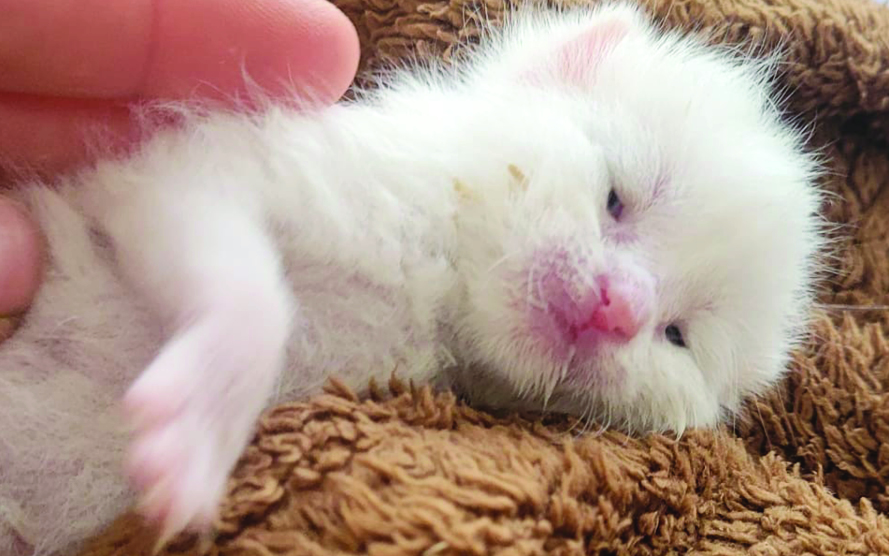
Newborn kittens aged between 0-2 weeks will have their eyes closed and their ears folded. They will have no teeth and their gums, nose, and paws may appear bright pink in colour. The umbilical cord normally falls off on its own at around 4 to 5 days of age so at 1 and 2 weeks old they will have no umbilical cord. Their claws will be non-retractable.
Kittens this age belong with their mother full time. Please DO NOT remove the kittens. Their mother will be close by keeping an eye on them. If you do not see a mother present please call the DSPCA on (01) 499 4700 select option 3 or email info@dspca.ie
Should I handle kittens at this age?
The simple answer is no. Leave the kittens alone during this stage.
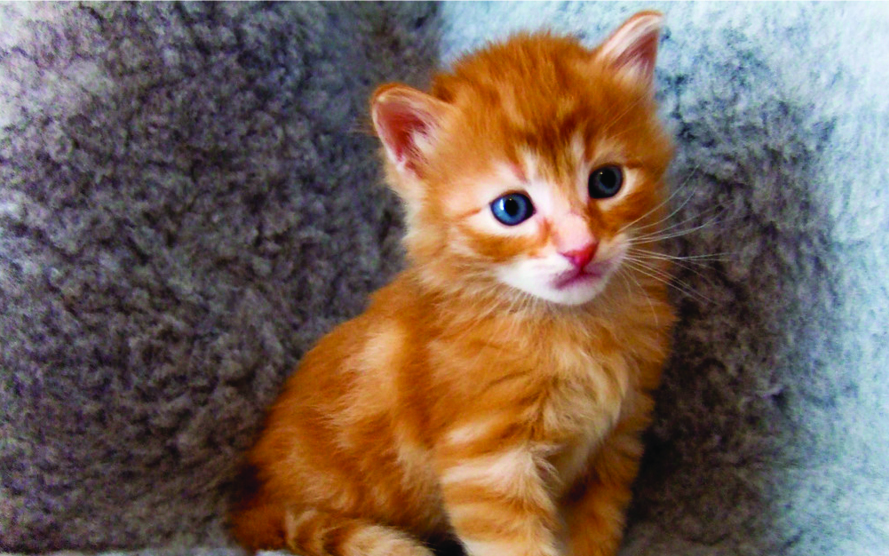
At 2 weeks old the kitten’s eye will be open and baby blue in colour. Their vision will be poor. The ear canals will be open and their ears will be small and round like a bear cub. They will have no teeth and their claws will still be non-retractable. At 3 weeks old their ears begin to point upward and their vision and hearing is slowly improving. At 4 weeks old they will start to explore and develop and be able to make eye contact and react to sights and sounds in the environment.
2-4 week old kittens belong with their mother full time. Please DO NOT remove the kittens. Their mother will be close by keeping an eye on them. If you do not see a mother present please call the DSPCA on (01) 499 4700 select option 3 or email info@dspca.ie
Should I handle kittens at this age?
The key socialisation period in kittens is from 2-3 weeks up to 10 weeks of age. Play is the best method to help them physically and socially develop. Socialisation is important to help kittens be comfortable around humans and other animals. Don’t remove them from where they are as they do need to be with their mother but you can start to interact with them and the best way in through play. Small home made toys such as tin foil scrunched up into little balls, cardboard toilet roll holders and paper towels are great play items in addition to traditional kitten toys. As a guideline ideally kittens should have pleasant interactions with people for 30–60 minutes per day. If the kittens approach you, you can pet and touch them. This will help the kittens be ready for adoption when they are old enough and to settle into a home environment and be comfortable around humans.
At 4 weeks old their vision and hearing has much improved. The kitten’s teeth will continue to develop and will start to come through the gums. Their claws will be retractable. At 5 weeks they will be running and playing confidently. Their social skills with humans and other animals will start to develop more and their grooming skills will be much improved. If healthy they may begin to the weaning process and can be introduces to wet kitten food along with their mother’s milk. If weaned off their mother they will require wet food and clean water at all times.
4-6 week old kittens are still better off being with their mother full time. Please DO NOT remove the kittens. Their mother will be close by keeping an eye on them. If you do not see a mother present please call the DSPCA on (01) 499 4700 select option 3 or email info@dspca.ie
Should I handle kittens at this age?
The key socialisation period in kittens is from 2-3 weeks up to 10 weeks of age. Play is the best method to help them physically and socially develop. Socialisation is important to help kittens be comfortable around humans and other animals. Don’t remove them from where they are as they do need to be with their mother but you can start to interact with them and the best way in through play. Small home made toys such as tin foil scrunched up into little balls, cardboard toilet roll holders and paper towels are great play items in addition to traditional kitten toys. As a guideline ideally kittens should have pleasant interactions with people for 30–60 minutes per day. If the kittens approach you, you can pet and touch them. This will help the kittens be ready for adoption when they are old enough and to settle into a home environment and be comfortable around humans.
At 6 weeks age old, the kitten’s baby teeth will begin to reach their final stage of early development. Their eyes will still be blue, and vision and hearing will be fully developed. At this age they will be socialising confidently with their siblings and be curious about their surroundings and eager to explore. Their coordination improves and if they jump from a small height they will land on their feet. At 7 weeks old their eye colour will be changing, and the adult eye colour will begin to emerge. There will be a spike in energy and playtime will increase. They are able to run, climb and confidently jump from small heights.
At 7 weeks kittens should receive ample kitten wet food, and may have kitten dry food as a supplement. They should have access to plenty of fresh clean water and a shallow litter box at all times.
At this point you you can call the DSPCA on (01) 499 4700 (select option 3) or email info@dspca.ie to make arranges for an appointment to be made to bring the kittens into the shelter. Please don’t just arrive with them.
Should I handle kittens at this age?
The key socialisation period in kittens is from 2-3 weeks up to 10 weeks of age. Play is the best method to help them physically and socially develop. Socialisation is important to help kittens be comfortable around humans and other animals. Don’t remove them from where they are as they do need to be with their mother but you can start to interact with them and the best way in through play. Small home made toys such as tin foil scrunched up into little balls, cardboard toilet roll holders and paper towels are great play items in addition to traditional kitten toys. As a guideline ideally kittens should have pleasant interactions with people for 30–60 minutes per day. If the kittens approach you, you can pet and touch them. This will help the kittens be ready for adoption when they are old enough and to settle into a home environment and be comfortable around humans.